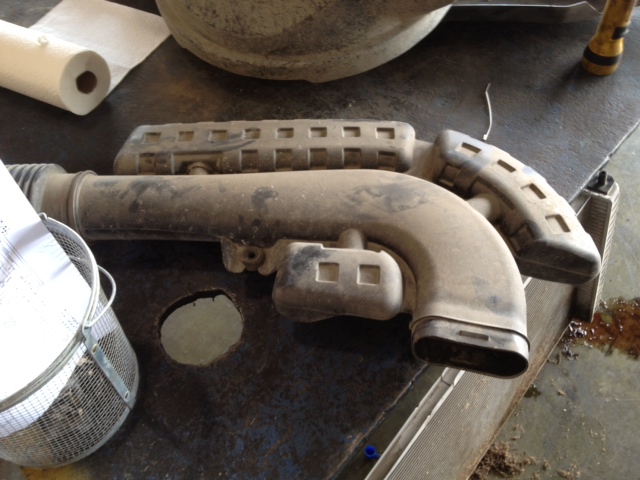
I thought about this myself Bob, Need to adapt to exhaust...I have been in the auto service buis. for 30 years & am always having to tell the young ones the story of how the engineers came up with this idea,,,,, two auto engineers were in a bar after work, one with his beer 2/3 gone the other with 1/2 gone & they both started blowing tunes separately , then together ??? no noise/quieter ,,,,,, then we all got those skin tags hanging off our intake tubes. Some of the high perf. high revving engines use a sol. controlled valve/deverter to change noises at diff. RPM's. David R. Cook RV6A Rotary ( depressed, 3rd. year of not going to Sun-N-Fun in Lakeland FL.)
From: "Bob Tilley" <btilley@mchsi.com>
To: "Rotary motors in aircraft" <flyrotary@lancaironline.net>
Sent: Thursday, April 11, 2013 10:59:54 PM
Subject: [FlyRotary] Muffler designs
Marty, Lynn and others
Attached is a picture of an intake tube for a Ford pickup truck. It got me thinking about what was Ford thinking?!?!! And from there, how could we use this. The intake air comes in from the left. It travels past a series of deadend offshoots, of different sizes. Then enters the throttle body after the turn at the bottom.
In designing the mufflers for our rotaries, there are different pitches that are troublesome. Would a design similar to this work for our ear shattering vibs, and let the throaty V-8 sound thru?
Just wondering
Bob Tilley