Al Wick said:
Those appear to be discrete sensors.
Meaning they are either off or ON. A very important concept in reducing risk is
to use analog sensors whenever possible. Your understanding of your fluid
level is better with analog sensors. Less apt to discount the readings,
you can see the gradual change in fluid level.
You want as many factors in your favor as
possible.
Al, you’re right, these sensors are either on or off, as in a switch,
and I agree with your perspective on analog sensors for continuous sensing.
The value in these sensors (that I see) is that they have no moving
parts (usually higher reliability) and can provide low-level sensing of fuel or
water (as in a fuel header tank or radiator overflow bottle). Because they can only switch low
currents, about 40 mA at 5V or 12V, they can either power an LED for the low-level
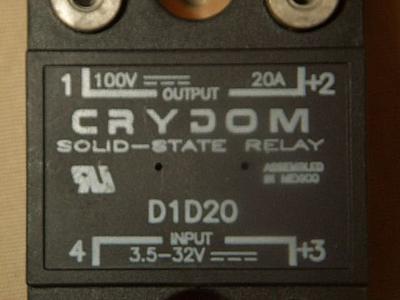
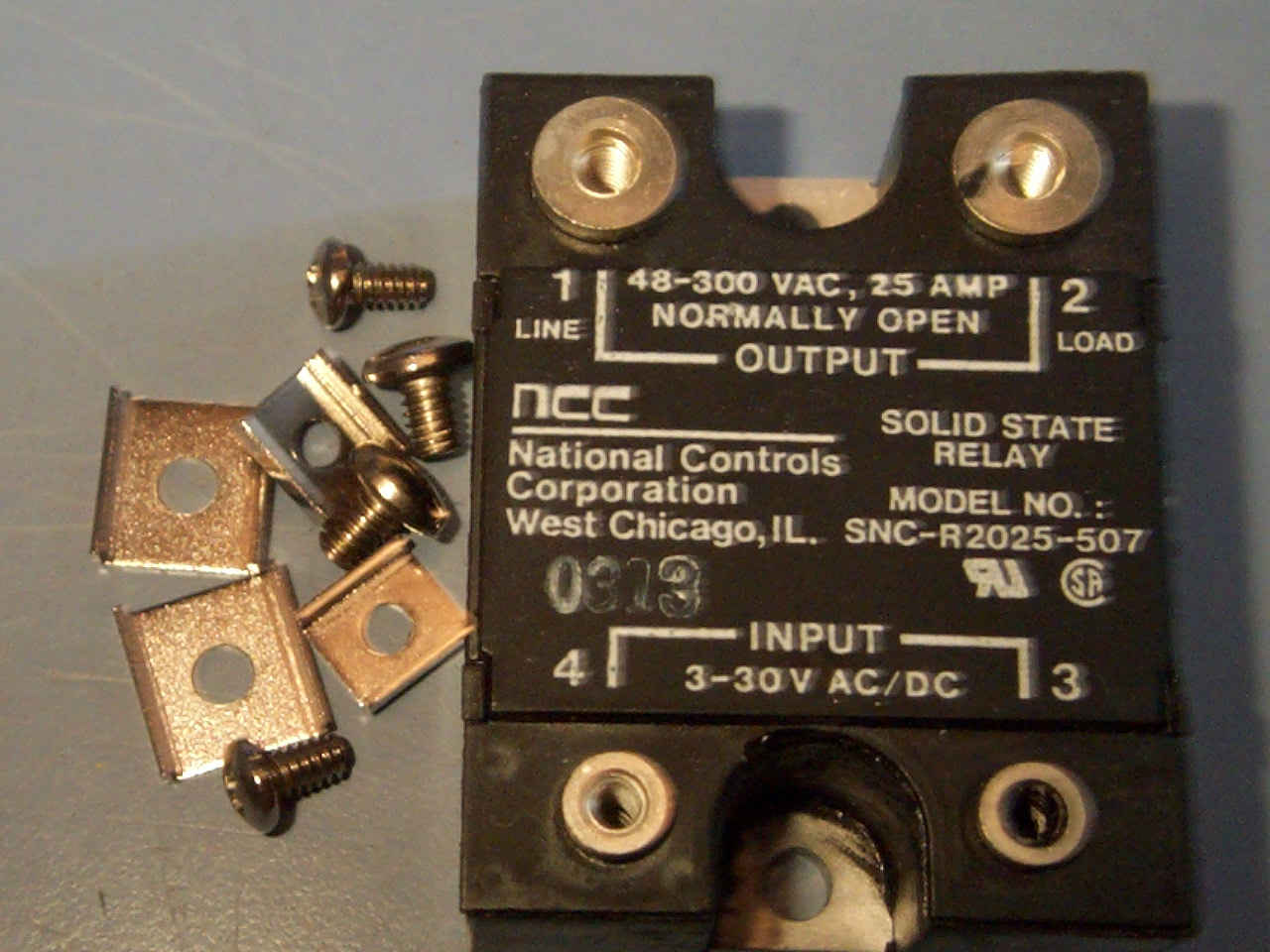
sensing task, or switch something like a solid-state relay. An example of the relay is Crydom’s D1D20,
that requires a controlling amperage of 1.6 mA at between 3.5 to 32 VDC, providing
up to 20 amps of DC current at 100V on the other end. The picture on the left is a DC controlling DC relay, the
one on the right is DC controlling AC.
If I’m not
mistaken Rusty’s tried the low level sensors. Rusty, any experiences to offer? … or good applications?
Regards, Chris
Anyone looking for good
liquid level sensors might like the eBay offering for these:
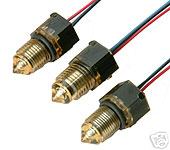
GEM ELS-900 Miniature Liquid
Level Sensor
Ends
Feb-04-06 07:59:51 PST
Currently $10 for
five. They run about $50 each if
new.
Here’s the link to the
eBay sale:
There’s a second sale from a
different vendor for one sensor at