|
|
In a message dated 9/13/2004 9:13:30 AM Central Daylight Time, keltro@att.net writes:
<< Lynn,
Could we have some clarification here.......Your previous post indicated
that you are measuring oil temp of your race car in the pan and that you do not like to see temps over 190 degrees.......If this is the case some of the group
that are flying may be getting between the devils fence and his front door
with temps of 200 to 240 degrees "After" the oil cooler...... With that in mind
how important do you think replacing the stock spring loaded rotor cooling
jets with fixed Weber (or equivalent) jets and/or the rotor bearings with the
racing (more clearance) version considering the rpm and power that we are
asking of the engine (N/A) in our aircraft?
As usual we really appreciate your no nonsense real world experience...
Kelly Troyer
Dyke Delta/13B/RD1C/EC2
I actually measure cooled filtered oil as it enters the engine. (see the picture). I have another gage in the oil storage tank to give me a measurement on the pressure side cooler performance. I do not know what the spent oil temp is, in the "pan." We have no pan. Just a flat plate. (about 20 degrees drop from the pressure side cooler) We have a video camera recording two EGT gages, scavenged oil temp, RPM, voltage and water pressure. The jets in the crank are larger than the Weber .180MM or .200MM that the racers replace them with. ??????
There is a spring loaded ball below that jet nut that shuts off cooling oil flow to the rotors at low RPM. This allows for rapid warm up, and keeps good oil pressure at idle RPM. When the revs go up, and more oil pressure is available from the pump speed increase, the increased pressure, and centrifugal force lift the balls off of the oil port, and rotor cooling oil spray begins
So what is the change to a fixed (smaller) jet for?
When you race the car with big ports and lots of overlap, the idle ends up around 2000 RPM just to get it smooth enough to deal with. So the pump is turning fast enough that the "no" oil pressure at idle is not a factor. It will have close to normal oil pressure. But if you install a modified oil pressure relief valve to get the oil pressure up to 115 pounds, and then start using the engine close to 9,000 RPM, the stock crank jets are too big, and too much of the extra oil pressure is wasted being sprayed into the rotors. It cannot cool the rotors to any additional amount, and it just foams the oil more than normal. So the (smaller) jets reduce the pressure loss and the excessive oil sprayed into the rotors, when well above stock oil pressure is used. I use Weber 180 main jets. Idle is 2,200 RPM. We shift at 9,600 RPM. Idle oil pressure is 85 PSI. Off idle to 9,600 oil pressure is 100 PSI.
On the Nopistons list, many of the kids do this modification, and then lament the idiot light blinking at hot idle. There is no stress on the bearings at all at low speeds and any oil at all is enough. So I tell them to tape over the light and forget about it. When they scream the engine, the oil pressure is right up where it belongs and there is no problem.
I helped a local guy with some welding on a Dyke Delta, and have a set of plans. I built up an expanded Dyke Like design in electrical conduit. I love that look and the performance is impressive. But just too much work for me. I think race car fuel cells in the wing roots would be better than 47 gallons behind my head. There are so many things I would change that it wouldn't be a Dyke when I got done. But I digress.
Lynn E. Hanover
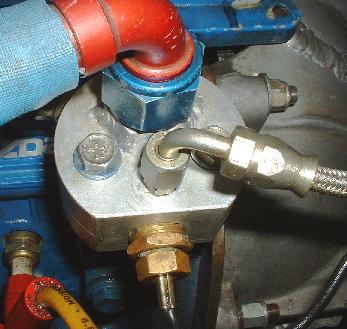
OiportDRside.jpg
|
|